Praise Be the Algorithm: A Modern Faith Story in Scrolls and Swipes
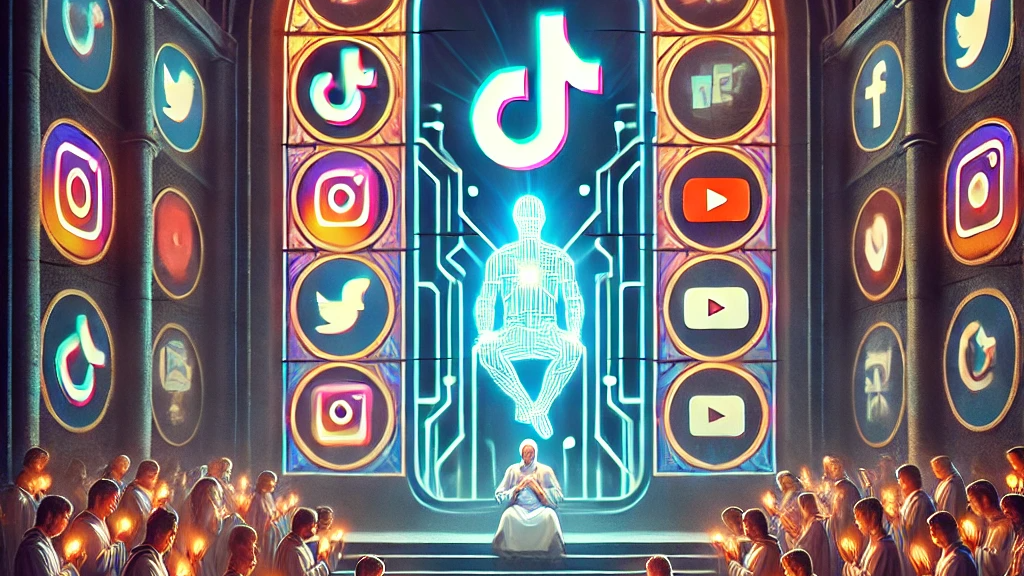
I didn’t mean to join a new religion…… Like who wakes up and says I found a new religious calling at 40 years old.
However, One minute I was watching a TikTok on how to fold fitted sheets, and the next thing I knew, I was 17 videos deep into “healing my inner child,” three reels into the gospel of productivity, and somehow convinced I needed both a prayer journal and a standing desk.
No altar call. No choir. Just me, my algorithm, and a For You Page that somehow knows me better than my last pastor

I. The New Pews
I didn’t leave the church. I just got busy. Then disillusioned. Then distracted.
But somehow, I still found myself in something that looked like worship.
Except now, it involved push notifications instead of pews. Swiping instead of singing. Scrolling instead of scripture.
Nobody told me I had joined a new religion. But I had rituals. I had a high priest (the algorithm). I had a congregation (my followers). And, more than anything, I had the same basic human ache: the desire to feel known, guided, and grounded.
We’ve always needed rhythm to feel rooted. Ancient faiths knew this—prayers at dawn, candles at dusk, sacred meals on holy days. Today’s rituals still exist, but they look different:
· Wake up. Check notifications.
· Scroll before bed.
· Confess to the algorithm: “I’m feeling anxious.”
· Await a response: a meme, a motivational reel, a prayer disguised as a productivity hack.
These behaviors form unspoken liturgies, teaching us what matters: be seen, stay relevant, consume more, feel better—fast. The algorithm rewards consistency, much like an old preacher rewarding faithfulness. But what happens when your god doesn’t know your soul, just your behavior?

🤖 Section 2: The Algorithm as Pastor, Prophet, and Judge
Unlike the pastors of old, our new “spiritual leaders” don’t ask for accountability or repentance. They ask for data.
- YouTube tells you what to believe.
- Instagram shows you who you should become.
- Spotify scores your moods like a choir in the background.
- TikTok replaces testimony with trauma dumps.
And we listen—devoutly. We trust the algorithm to guide our choices, to tell us what’s true, what’s trending, and what’s “for us.” In many ways, it is more responsive than the institutions we left behind. It knows when you’re sad. It predicts what you want before you do. It promises community without confrontation.
But algorithms don’t love you. They optimize you—for clicks, engagement, conversion. They don’t shepherd souls; they segment audiences.
🌐 Section 3: Digital Discipleship and the Hunger for Meaning
This isn't just about tech replacing church. It’s about tech filling the emotional and spiritual vacuum left behind by institutions we no longer trust.
- Where do people go for comfort?
- Who shapes their worldview?
- How do they determine what's right or good?
For many, the answer isn’t God or scripture or elders—it’s content. Endless content. And the more intimate it feels, the more spiritual it becomes.
We’re witnessing the birth of a new kind of discipleship. Influencers become life coaches. Content creators become thought leaders. AI becomes a confessor. And the audience becomes a congregation, nodding silently in agreement, hoping the next post finally brings clarity, peace, or purpose.

🧠 Section 4: Is This Just the New Sacred?
Maybe this isn’t all dystopian. Maybe we’ve always turned to what reflects us, echoes us, and makes us feel seen. But the danger lies in confusing data with discernment. Just because a reel resonates doesn’t mean it’s wise. Just because something is “for you” doesn’t mean it’s good for you.
True spirituality challenges, stretches, disrupts. The algorithm only mirrors. It offers the sacred without the sacred wound. It offers affirmation without transformation.
🕊️ Conclusion – The Church We’re Building, Consciously or Not
We are spiritual beings, even in a digital age. That part hasn’t changed. But what’s changing is where we bring our questions. Who we listen to. What we obey. And if we’re not careful, we may discover we’ve given over our moral compass to a code that doesn’t care if we flourish—only that we return.
So the question isn’t just “Is tech creating a new kind of faith?” The question is: Have we already converted?