Do My Spiritual Clothes Still Fit ?

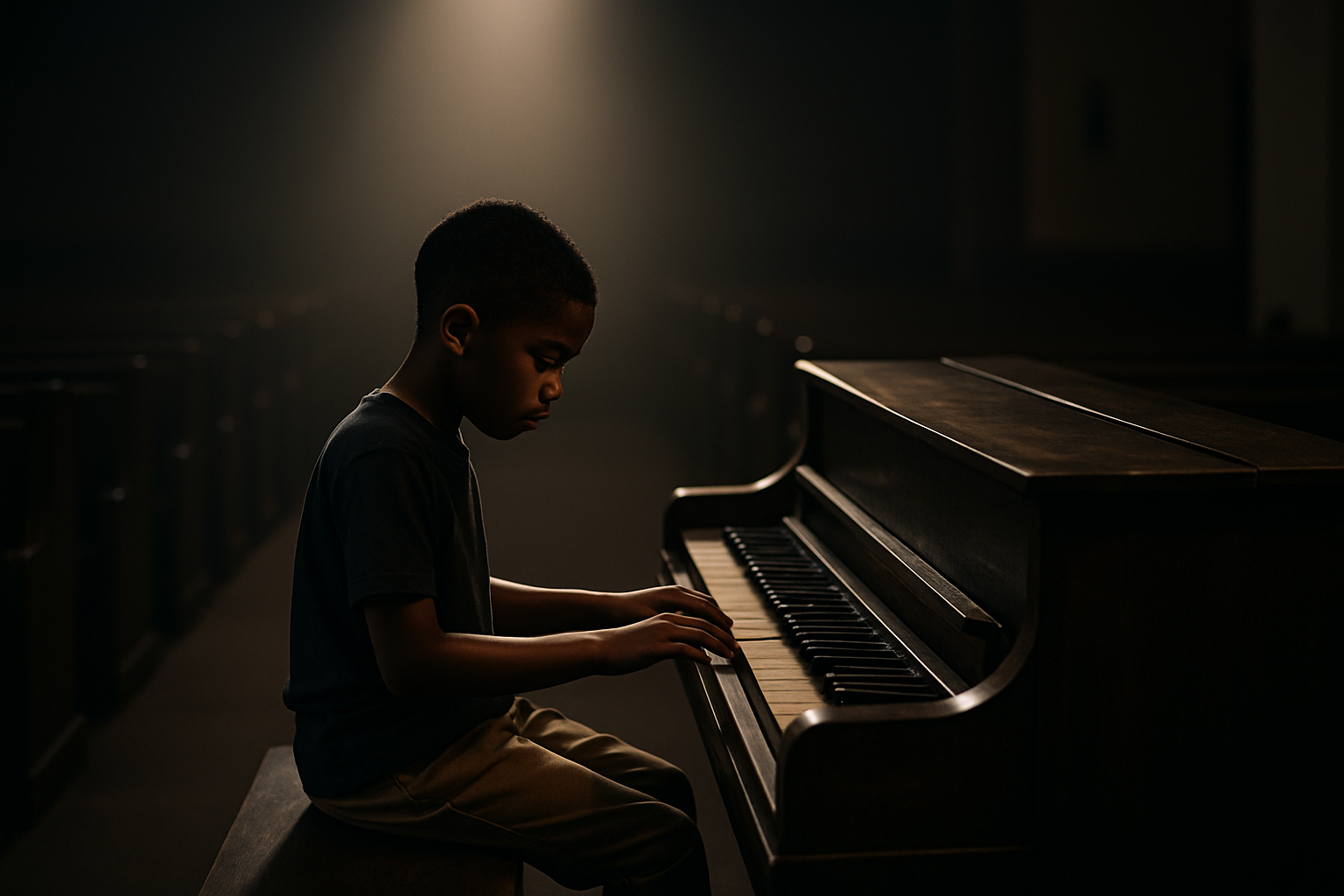
Shedding the Layers of Performance, Pressure, and Spiritual Inheritance.
This series was born not from outrage, but from reflection—deep, painful, and personal. In therapy, I’ve had to peel back layers of my own story to face how shame, pride, and anxiety were shaped early on—not just by family or life events, but by the spiritual world I was raised in. The moment I started naming those root causes, I also started hearing echoes—familiar ones—in how we talk about purpose, calling, and identity in the Black church.
At some point, I said it out loud: “This sounds like grooming.” Not in the sexual sense, but in the slow, persuasive shaping of a child to fit into a role before they even know who they are. That thought haunted me. So I went looking. I stumbled across Dr. Lisa Miller’s The Spiritual Child—a book that didn’t just explore spirituality, but affirmed something I was already feeling: that some of our deepest spiritual imprints are made long before we have the language to name them.
A Note on the Series: This is the first of a three-part series. In Part One, we begin with my personal story—the lived experience of being shaped spiritually before I could name who I was. In Part Two, we explore the psychological and scientific framework of grooming and spiritual identity formation, taking a closer look at how these patterns operate under the surface. Finally, in Part Three, we’ll zoom out to explore the cultural and digital implications of these shaping forces, and how many of us are still trying to reclaim our voices in a world that expects us to perform.
This is my story. And maybe, in parts, it’s yours too.
Memories live differently in all of us. What follows is my story—shaped by both trauma and joy, confusion and clarity. my mother gave me something I asked for—a piano. She followed her heart as a mother, trying to support what she believed was a gift in me. She didn’t force this path on me
When my Uncle Anointed My Hands
I started piano lessons before anybody ever said I had the gift of music.
My mom met some woman—through church, or maybe just word of mouth—who gave piano lessons out of her house. And let me tell you, that house was dirty. Not “lived in”—dirty. The kind of place where you didn’t want to set your backpack on the floor.
And the teacher? She wasn’t exactly Mrs. Rogers. More like the kind of mean substitute teacher who thought learning should hurt just a little.
Naturally, my mom loved her. Said she was “strict” and would “make me learn the right way.” So every week, I went.
At the time, the only musical gift I had was knowing all the words to Bone Thugs-N-Harmony’s “Tha Crossroads.” And trust me—I was fluent. But sitting at that dusty piano, fumbling through scales and simple songs? That wasn’t a gift. That was survival.
A little while after those lessons had started, it happened.
One Sunday, my uncle called me forward. We didn’t call him Uncle. We called him Bishop. Always. In the church, he stood taller than most men, voice full of conviction, presence heavy with authority.
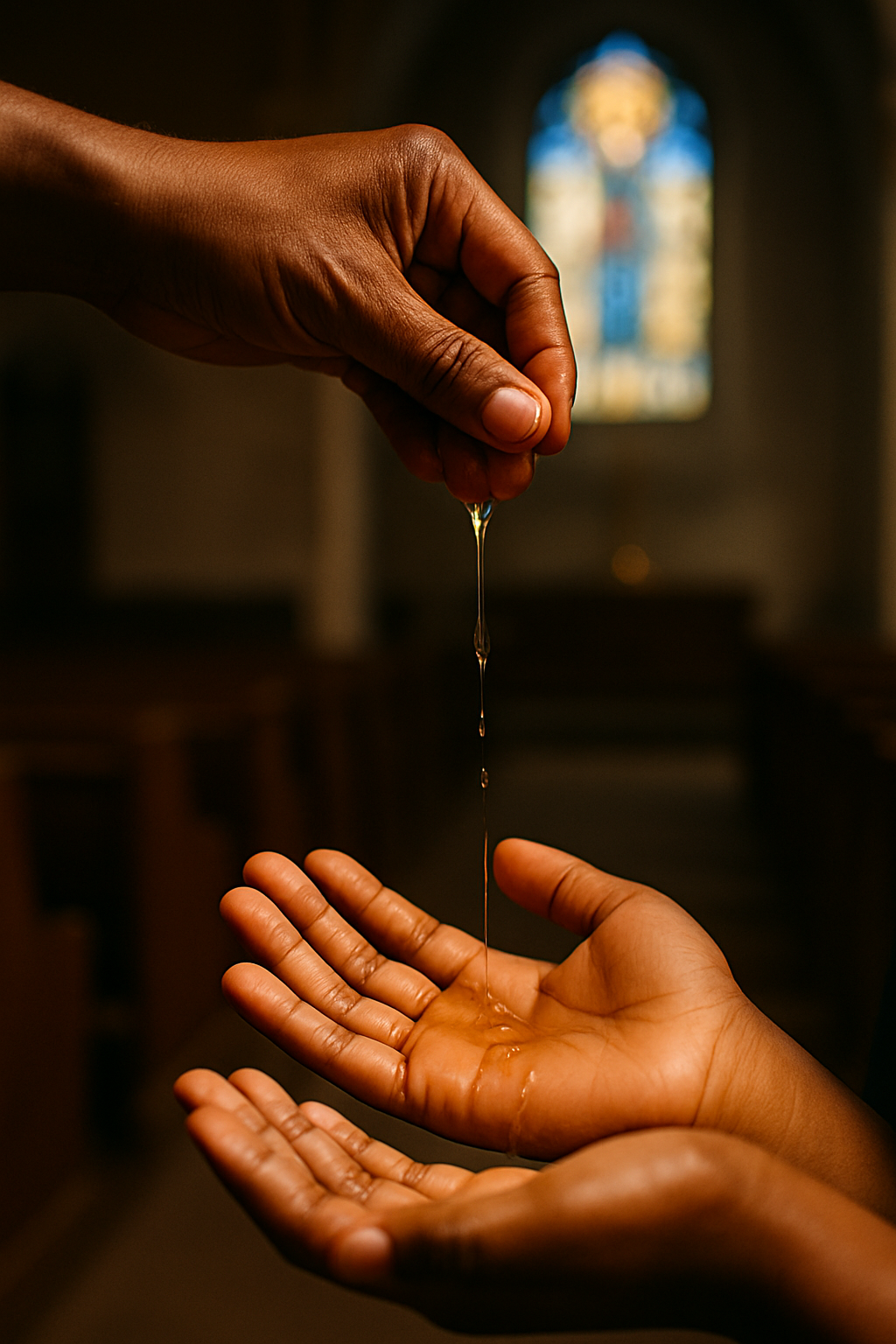
He anointed my hands with oil right there in front of the church. Told me that God had given me the gift of music. Declared it loud enough for everyone to hear. And suddenly, I wasn’t just a kid in piano lessons anymore—I was a child of promise.
But standing there with oil dripping from my fingers, I remember thinking, I have more obvious gifts and this is not one, at all.
Here’s the thing. In Black church spaces—and in many spiritual communities—this kind of moment is seen as beautiful. Affirming. Prophetic. Sometimes it truly is. But it can also become something else, something quieter and harder to name: the beginning of a shaping, a grooming of identity around other people’s expectations.
We don’t always stop to ask the child what they see for themselves. We anoint, appoint, and assign—often with the best of intentions—before the child even knows who they are.
And so begins a conversation we rarely have out loud: the subtle ways spiritual grooming weaves through our communities and our families.
When the Grooming Took Root
I got saved in 1993, when I was 8 years old.
At the time, I had no idea about trauma, anxiety, shame—or that a part of me was about to be shaped by all three.
By the time I was 11, folks at church were already calling me Kirk Franklin. I didn’t ask for that. I didn’t even understand what that meant yet. But at church, music was the heartbeat of the service. We had a rocking choir, and music was one of the mainstays that kept folks coming back.
Then one day, everything changed.
One Sunday, all the musicians were gone. Vanished. No warning. As I got older, I started to piece it together—probably became too expensive to keep a full band of professional musicians on payroll. Economics had a way of shifting the Spirit real fast.
And just like that, all that was left was the drummer—who also happened to be the pastor’s son.
What I still can’t fully explain is why I ended up behind the piano.
Did God tell the pastor I was ready? Or was he just tired of hearing terrible music limp out of the old red hymn book?
Either way, I didn’t have a choice.
One Sunday, I was forced to play—and when I say forced, I mean forced. I wasn’t asked. I wasn’t prepared. I wasn’t ready.
I knew one chord. One.
And there I was, sitting at the piano, expected to magically lead a song I had never heard, had no clue how to play, with an entire congregation waiting to be “ushered in.”
That moment cracked something inside me.
I felt exposed. Humiliated. Anxious. And more than anything—I felt like if I didn’t perform, I would disappoint everyone. I would disappoint God.
And that’s when it started: the personality that was born in me to perform.
To be what they needed. To become what was expected—even if it wasn’t true to who I was.
That’s the unspoken side of spiritual grooming: not just the shaping of a role, but the slow training of a child to believe their worth comes from performing that role.
It’s subtle. It’s sanctified. And it’s one of the deepest wounds we carry without ever calling it by name.
Lets Start Now an Here, and
I wish I could tell you that was the last time I felt that way behind a piano—or in a pew—or in my own skin.
But that’s how it starts.
First the oil. Then the expectations. Then the moment when you’re pushed out in front of people, carrying a weight you didn’t choose, praying that performing well enough might quiet the anxiety that’s already humming beneath your skin.
It’s easy to praise that kind of moment as purpose. It’s harder to admit that for some of us, it was the beginning of trauma.
That’s the part we rarely name. That’s the part we’re taught to spiritualize away.
But not here.
In this series, we’re going to talk about it. The grooming we don’t always see. The way it shapes our faith, our identity, and our ability to tell the truth about both.
Sanctified. Anointed. And Groomed.
We start here.